
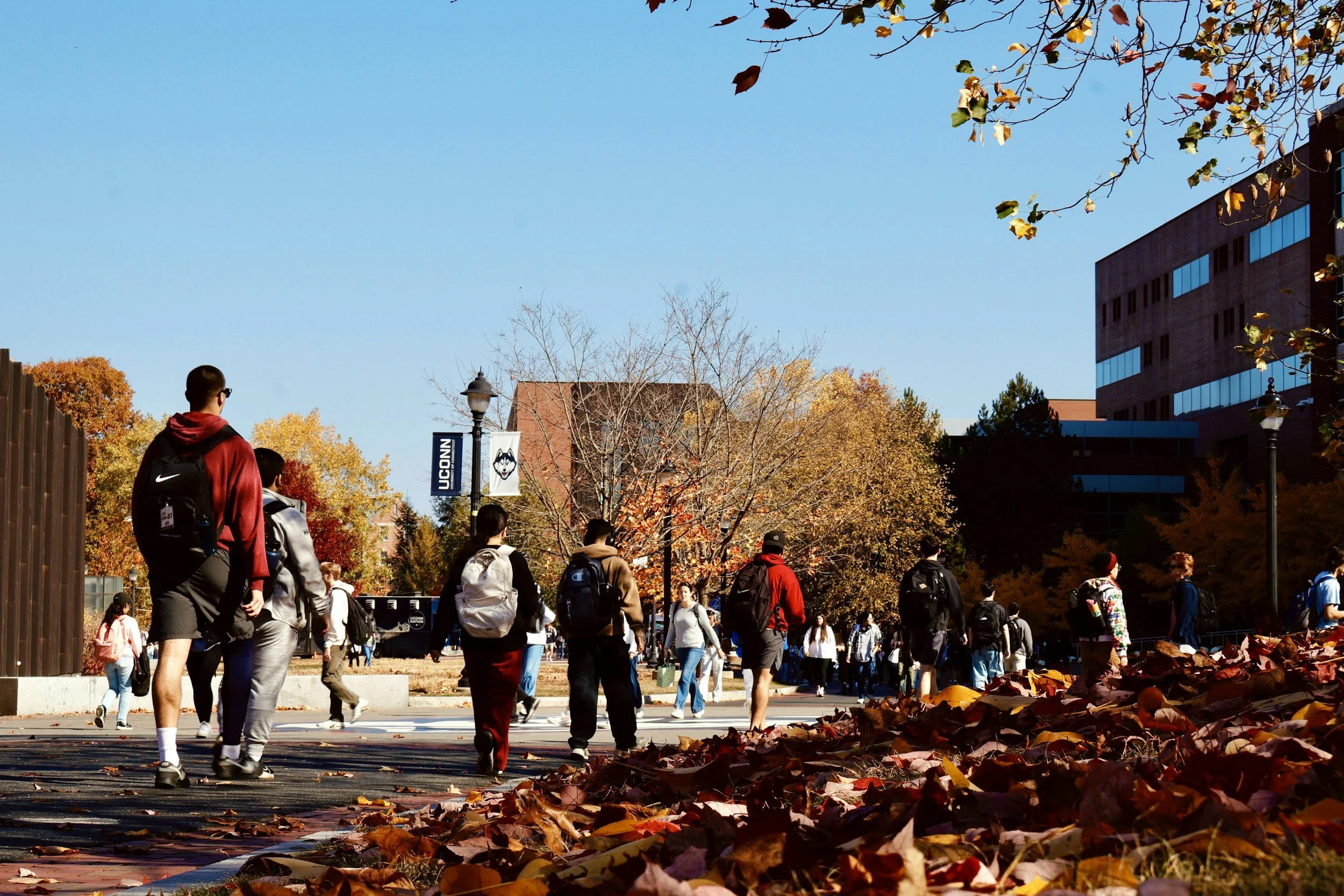
Move-in week comes with a lot of checklists.
Bedding? Check.
Laptop charger? Check.
Way too many Command strips? Probably.
A shower caddy, laundry detergent, textbooks, medications, snacks, headphones, and approximately 47 things you won't remember you need until your parents have already driven home? Check.
But there's another checklist that deserves some attention as you start college—or head back for another year:
Your mental health checklist.
The beginning of a college semester can be exciting, but it can also be overwhelming. Even positive changes require adjustment. You're navigating new schedules, different expectations, changing friendships, academic pressure, roommates, finances, relationships, independence, and decisions about what comes next.
For first-year students, almost everything may feel unfamiliar. For returning students, the challenges may be different: harder classes, changing friendships, leadership responsibilities, internships, uncertainty about your major or career, or simply realizing that college hasn't turned out exactly how you imagined it would.
Taking care of your mental health doesn't mean eliminating stress. It means building habits, support systems, and resources that make stress easier to manage.
As you begin the semester, here's a mental health checklist worth adding to your move-in plans.
Your Back-to-College Mental Health Checklist
- [ ] 1. Figure Out Where You Can Go for Help—Before You Need It
Don't wait until you're overwhelmed to figure out what mental health resources are available to you.
Take a few minutes during the first couple of weeks of school to find your college's counseling center, learn how appointments work, and save the contact information in your phone.
You may also want to explore therapists outside of your university, particularly if you're looking for ongoing therapy, specialized support, greater scheduling flexibility, or more privacy from the campus environment.
Think of this the same way you'd locate the student health center or know where the nearest pharmacy is.
Hopefully, you won't urgently need it.
But if you do, you'll already know where to start.
- [ ] 2. Identify Your People
College can put you in a strange situation: you can be surrounded by thousands of people and still feel incredibly lonely.
Think about the people you can actually talk to when things aren't going well.
That might include a roommate, friend, sibling, parent, professor, coach, resident advisor, mentor, therapist, or someone from home.
You don't need a huge social circle. You need a few people with whom you can be real.
If you're a first-year student and don't have those people on campus yet, that's okay. Meaningful friendships usually aren't created during one orientation event. Give relationships time to develop.
And stay connected with people who already know you well while you're building new relationships.
- [ ] 3. Create a Sleep Routine That Is at Least Somewhat Realistic
College and inconsistent sleep tend to find each other.
Late-night studying, early classes, roommates, social events, gaming, scrolling, and the temptation to treat every Thursday like the weekend can quickly disrupt your sleep schedule.
You don't need a perfect bedtime routine.
But your brain does need sleep.
Pay attention to whether you're regularly sacrificing sleep to keep up with everything else. Chronic exhaustion can make stress harder to manage and can affect concentration, motivation, emotional regulation, and academic performance.
A realistic sleep routine beats an ideal one you never follow.
- [ ] 4. Put Something on Your Calendar That Has Nothing to Do With Achievement
College can start to feel like one giant performance review.
Grades. Internships. Athletics. Organizations. Scholarships. Graduate school applications. Networking. Resumes.
It can become easy to believe that every hour needs to be productive.
It doesn't.
Make room for something you enjoy simply because you enjoy it.
Go to the gym without tracking a goal. Watch a terrible movie with your roommate. Walk around campus. Play music. Read something that isn't assigned. Join an intramural team. Get coffee with a friend.
Your mental health needs space where you're allowed to simply be a person—not a GPA, athlete, applicant, employee, or future professional.
- [ ] 5. Notice How You're Talking to Yourself
College creates plenty of opportunities for comparison.
Someone gets a better grade.
Someone already has a friend group.
Someone lands an internship.
Someone seems more confident.
Someone appears to have their entire future mapped out at 19.
Meanwhile, you may feel like you're barely keeping your laundry situation under control.
Be careful about turning someone else's highlight reel into evidence that you're falling behind.
When you notice yourself thinking things like Everyone else has this figured out, I'm not smart enough to be here, or I'm failing at college, challenge those thoughts.
Ask yourself:
Would I talk to a friend this way?
If not, you probably don't deserve to hear it from yourself either.
- [ ] 6. Don't Let One Bad Week Become a Story About Your Entire Future
You bombed an exam.
You didn't get invited.
You miss home.
You hate one of your classes.
You and your roommate had an argument.
You're questioning your major.
You spent Friday night alone while social media made it look like everyone else was having the greatest night of their lives.
A bad week is a bad week.
It isn't proof that you chose the wrong college, won't make friends, aren't smart enough, or won't succeed.
College has ups and downs. Try not to make permanent conclusions about yourself during temporary difficult moments.

- [ ] 7. Pay Attention to How You're Coping With Stress
Everyone needs ways to decompress.
The important question is whether your coping strategies are actually helping you recover—or simply helping you avoid what you're feeling.
Pay attention if stress regularly leads to excessive drinking, substance use, isolation, doomscrolling, skipping class, overspending, emotional eating, avoiding responsibilities, or staying in bed all day.
You don't need to judge yourself for how you're coping.
Just get curious.
Is this helping me feel better—or helping me avoid feeling anything?
That distinction matters.
- [ ] 8. Build Some Movement Into Your Week
Exercise doesn't have to mean an intense workout program.
Walk across campus instead of taking the bus sometimes. Go to the recreation center. Take a fitness class. Play basketball. Run. Lift weights. Join an intramural team. Walk with a friend.
Movement can provide a mental break from academics and give your body an outlet for stress.
Find something you actually enjoy enough to keep doing.
- [ ] 9. Give Yourself Permission to Miss Home
You can be excited about college and homesick at the same time.
Those feelings aren't contradictory.
You may miss your family, friends, pets, bedroom, routines, favorite restaurant, church, hometown—or simply the feeling of being somewhere familiar.
Returning students can experience homesickness too.
Don't interpret missing home as evidence that you're doing college wrong.
Stay connected. Call home. Visit when you can. Keep a few familiar routines.
Building a new life doesn't require pretending your old one doesn't matter.
- [ ] 10. Check In With Yourself Once a Week
College gets busy quickly.
Before long, you're moving from class to class, assignment to assignment, weekend to weekend.
Pick one time each week to check in with yourself.
Ask:
How am I actually doing?
Consider your sleep, stress, mood, relationships, academics, eating habits, physical activity, and motivation.
Is something getting harder?
Have you been avoiding something?
Are you withdrawing from people?
Do you need help?
You don't have to analyze every emotion. The goal is simply to notice what's happening before you've been running on empty for six weeks.
- [ ] 11. Know the Signs That It May Be Time to Talk to Someone
College is stressful. But there is a difference between normal stress and struggling to function.
Consider reaching out for additional support if anxiety, sadness, stress, anger, loneliness, or other emotional difficulties begin interfering with your daily life.
That might look like:
Frequently skipping classes because you're overwhelmed
Having trouble sleeping or sleeping much more than usual
Withdrawing from friends and activities
Experiencing frequent panic or intense anxiety
Feeling persistently sad, hopeless, or emotionally numb
Struggling to concentrate or complete assignments
Losing interest in things you normally enjoy
Feeling unable to manage academic or social pressure
Relying heavily on alcohol or substances to cope
Feeling like you're constantly overwhelmed and can't catch up
You don't have to wait until things become unbearable before asking for help.
- [ ] 12. Remember That Therapy Isn't Only for a Crisis
One of the biggest misconceptions about therapy is that something has to be seriously wrong before you make an appointment.
It doesn't.
Therapy for college students can be helpful for navigating anxiety, stress, relationships, family dynamics, identity, perfectionism, academic pressure, major life transitions, grief, body image concerns, confidence, career uncertainty, and the complicated process of becoming more independent.
Sometimes therapy is about getting through something difficult.
Sometimes it's about understanding yourself better.
And sometimes it's simply having one place where you don't have to perform for anyone.
College Is a Transition—Even If You've Done It Before
First-year students aren't the only ones adjusting.
Sophomores may return to campus and realize their friendships have changed.
Juniors may suddenly feel pressure about internships, graduate school, and careers.
Seniors may be dealing with the uncomfortable question everyone keeps asking:
"So, what are you doing after graduation?"
Every year brings a different transition.
You aren't supposed to have everything figured out just because you've successfully completed another year of college.
The goal isn't to create a college experience with zero stress, uncertainty, loneliness, or difficult days.
The goal is to learn how to recognize what you need—and become more comfortable asking for support when you need it.
Looking for Therapy for College Students Near Davidson, NC?
At Davidson Family Therapy, we work with college-aged adults navigating anxiety, stress, academic pressure, relationships, family changes, identity, life transitions, performance pressure, and the uncertainty that often comes with figuring out adulthood.
Whether you're beginning your first semester, returning for another year, approaching graduation, or simply realizing that this semester needs to feel different than the last one, therapy can give you a place to slow things down and work through what's going on.
You don't have to wait for a crisis to take your mental health seriously.
Taking care of yourself belongs on the college checklist, too.
This article was written by the Davidson Family Therapy team, based in Cornelius and Davidson, NC, with professional experience providing therapy in the Davidson, Cornelius, Charlotte, and greater Lake Norman community.
📍 Davidson Location:
709 Northeast Drive, Suite 22
Davidson, NC 28036
📍 Cornelius Location:
20501 N Main Street
Cornelius, NC 28031
📞 Phone: 704-912-4095
👉 Tele-Mental Health / Online Therapy Available Anywhere in North Carolina
