
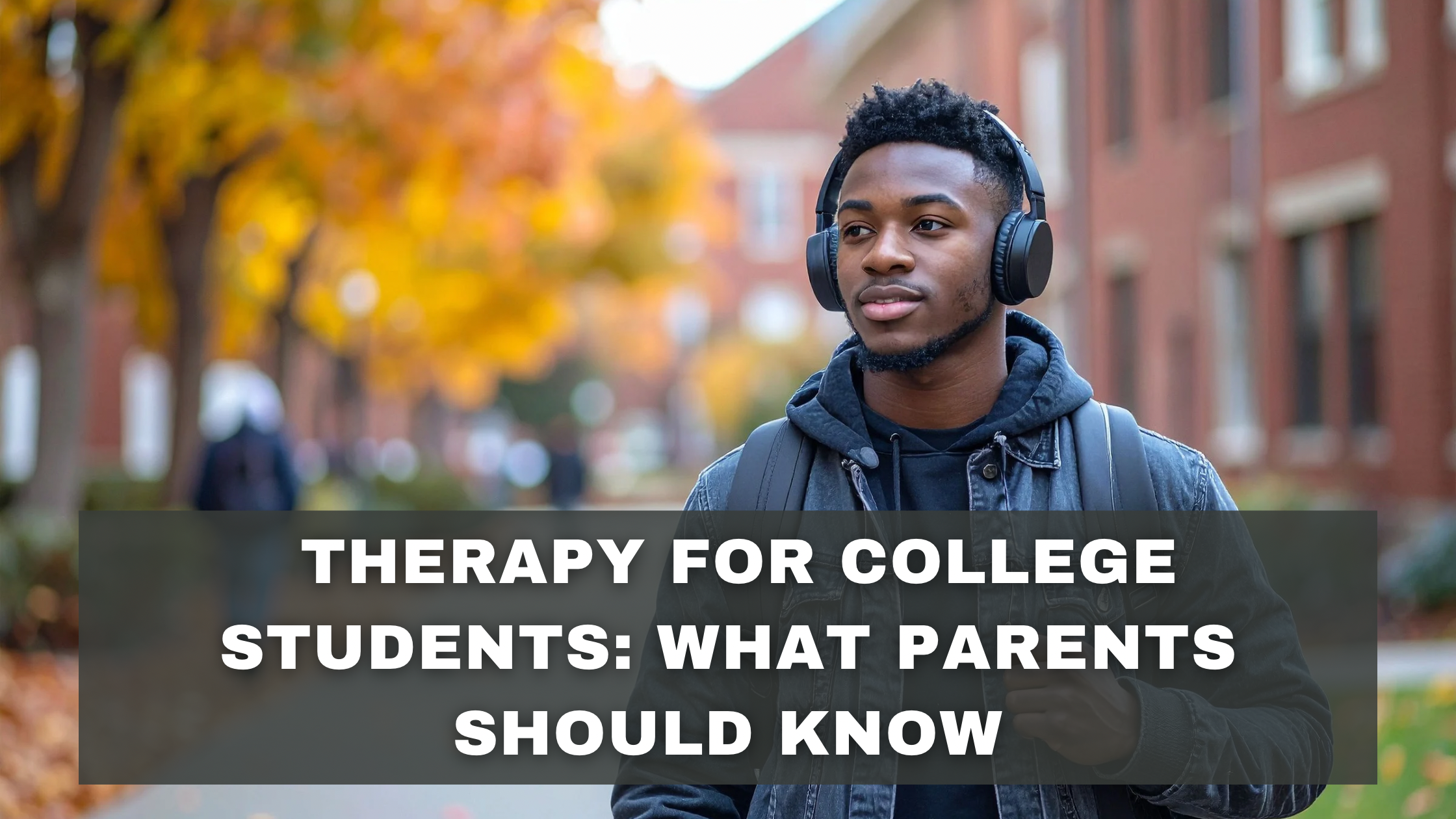
Therapy for College Students: A Guide for Parents Seeking Support
Sending a child to college is often a proud and hopeful milestone — but it can also bring unexpected concern. Many parents notice changes during the college years: increased stress, emotional withdrawal, anxiety, academic struggles, or a sense that their student is no longer quite themselves.
If you are wondering whether therapy for college students might be helpful for your son or daughter, you are not alone. Increasingly, parents are recognizing that mental health support during the college years is not a sign of failure, but a proactive and appropriate response to a demanding stage of development.
Why the College Years Can Be Emotionally Challenging
From a developmental and clinical perspective, college represents a significant period of transition. Students are simultaneously managing:
Increased academic rigor and performance pressure
Separation from familiar support systems
New social environments and relationship dynamics
Greater independence and responsibility
Financial stress and future planning
Identity development and self-definition
Even students who appear highly capable may struggle internally. Emotional stress during college does not necessarily indicate a lack of resilience — it often reflects the cumulative demands placed on young adults during this phase of life.
Common Signs Parents Notice in College-Aged Students

Parents often reach out when they observe changes such as:
Persistent anxiety or worry
Mood changes, irritability, or emotional withdrawal
Difficulty managing academic expectations
Sleep disruption or fatigue
Loss of motivation or engagement
Avoidance of responsibilities or social situations
Expressions of feeling overwhelmed, stuck, or hopeless
These signs do not always point to a crisis, but they can indicate that additional support may be beneficial.
What Therapy for College Students Provides
Therapy for college students offers a confidential, structured environment where students can explore their experiences with a trained mental health professional. Therapy is not about labeling or “fixing” a student — it is about support, skill-building, and growth.
College student therapy can help with:
Managing stress and anxiety
Developing emotional regulation skills
Improving coping strategies and problem-solving
Navigating academic pressure and performance concerns
Strengthening self-esteem and self-awareness
Addressing adjustment, mood, or relationship challenges
Many students find that therapy becomes a stabilizing resource during a time of rapid change.
Addressing Common Parental Concerns About Therapy
Parents often share similar questions and hesitations.
“Shouldn’t my student be able to handle this independently?”
Learning when and how to seek support is an important developmental skill. Therapy fosters independence by strengthening emotional and coping capacities.
“Is therapy only for serious mental health issues?”
No. Therapy for college students frequently focuses on stress management, transitions, identity development, and emotional well-being — not only acute mental health conditions.
“What if my student doesn’t want therapy?”
It is common for students to feel unsure at first. Open, non-judgmental conversations that frame therapy as support — rather than correction — are often most effective.
Therapy as a Preventative and Supportive Resource
University-affiliated counseling models increasingly emphasize early and preventative mental health care. Engaging in therapy for college students before concerns escalate can:
Reduce emotional distress
Improve academic functioning
Enhance coping and resilience
Support healthy transitions into adulthood
Many parents find reassurance in knowing their student has access to professional support outside the family system.
Supporting College Students in the Davidson & Charlotte Area
We provide therapy for college students attending Davidson College, Queens University of Charlotte, Belmont Abbey College, Johnson C. Smith University, UNC–Charlotte, Central Piedmont Community College, and Johnson & Wales University–Charlotte.
Our work with college-aged clients is developmentally informed, evidence-based, and tailored to the academic and emotional realities students face in the Davidson and greater Charlotte area.
How Parents Can Encourage Support
Parents play an important role in reducing stigma and normalizing mental health care. Helpful approaches include:
Expressing concern without judgment
Framing therapy as a resource, not a consequence
Emphasizing confidentiality and autonomy
Encouraging support while respecting the student’s independence
Therapy is most effective when students feel respected, supported, and empowered in the process.
A Thoughtful Step Toward Well-Being
If you are considering therapy for college students, your concern reflects care, attentiveness, and a desire to support your child’s well-being — not a failure on anyone’s part.
The college years are demanding, and having professional support during this time can foster emotional health that extends well beyond graduation.
This article was written by the Davidson Family Therapy team, based in Cornelius and Davidson, NC, with professional experience providing college student therapy and mental health services for the Davidson, Cornelius, Charlotte, and greater Lake Norman community.
📍 Davidson Location:
709 Northeast Drive, Suite 22
Davidson, NC 28036
📍 Cornelius Location:
20501 N Main Street
Cornelius, NC 28031
📞 Phone: 704-912-4095
👉 Tele-Mental Health / Online Therapy Available Anywhere in North Carolina
