

Have a Thanksgiving
Because the holidays don't have to be happy to be meaningful.
Every November, the messages begin. Be grateful. Make memories. Enjoy every moment. Cherish your family. Have a Happy Thanksgiving.
And for some people, that feels exactly right.
But for others, Thanksgiving comes with a complicated mix of emotions that don't fit neatly into a holiday greeting.
Maybe you're dreading a conversation with a family member. Maybe you're traveling with young children and already anticipating the exhaustion. Maybe this is your first Thanksgiving without someone you love. Maybe your teenager doesn't want to participate in the traditions they once enjoyed. Or maybe you're simply overwhelmed by the expectation that everyone should be happy because it's a holiday.
At Davidson Family Therapy, we recognize that holidays can bring joy and connection, but they can also bring stress, grief, anxiety, and complicated family dynamics.
So this year, we'd like to offer a slightly different holiday wish.
Have a Thanksgiving.
Not necessarily a happy one. Not a perfect one. Just a Thanksgiving where you're allowed to feel what you feel, take care of yourself, and find moments of meaning wherever you can.
Why Is Thanksgiving So Stressful for Some Families?
Thanksgiving has a way of bringing together things we spend much of the year managing separately: family relationships, financial concerns, parenting responsibilities, travel logistics, personal expectations, and memories of people or traditions we've lost.
Add the pressure to create a picture-perfect holiday, and even something as simple as sharing a meal can become emotionally exhausting.
Holiday stress isn't always about one major problem. Often, it's the accumulation of smaller pressures.
You may be trying to keep everyone happy, avoid an argument, manage your children's behavior, accommodate extended family, and somehow enjoy yourself in the process.
And sometimes, the hardest part isn't what happens at Thanksgiving. It's what you anticipate happening.
Family Gatherings Can Bring Old Dynamics Back to the Surface
You may be a confident, independent adult in your everyday life, but spending a few hours around certain family members can leave you feeling like you're 15 again.
Old disagreements resurface. Familiar roles return. Someone makes a comment about your parenting, your relationship, your career, or your appearance.
Perhaps you're expected to keep the peace because you've always been the one who does.
Family relationships are complicated because they carry years of shared history. Even when everyone has good intentions, gathering around the same table doesn't automatically erase unresolved tension.
What can help?
Start by adjusting your expectations. You don't have to resolve every family disagreement over Thanksgiving dinner.
Before the gathering, consider what boundaries would help you feel more comfortable.
That might mean deciding how long you'll stay, which conversations you're willing to participate in, or how you'll respond when someone brings up a sensitive subject.
A simple response such as, "I'd rather not get into that today," can be enough.
You don't need to convince everyone that your boundary is reasonable for it to be worth maintaining.
And remember, choosing not to engage in an argument isn't the same as agreeing with someone.
The Pressure to Make Thanksgiving Perfect
For many parents, especially those responsible for planning and hosting, Thanksgiving can feel less like a holiday and more like an elaborate performance.
There's the shopping, cooking, cleaning, coordinating, packing, decorating, and managing everyone's schedules.
Then there's the emotional work of trying to make sure everyone else has a wonderful time.
You might find yourself thinking:
Will everyone get along?
Am I doing enough to make this special?
Will the kids behave?
What if something goes wrong?
Why does everyone else seem to enjoy the holidays more than I do?
Social media can intensify these feelings. When you're scrolling past beautifully decorated tables and smiling family photographs, it's easy to forget that you're seeing carefully selected moments, not the entire experience.
What can help?
Give yourself permission to simplify.
Order part of the meal. Skip a tradition that no longer works for your family. Ask other people to contribute. Let the house be imperfect.
Consider asking yourself one question: What do I actually want my family to remember about this holiday?
Chances are, it has very little to do with whether the napkins matched or the turkey was ready on time.
A meaningful Thanksgiving doesn't require an exhausted parent.
Traveling for Thanksgiving Can Add Another Layer of Stress
Holiday travel can be challenging even under ideal circumstances.
Long drives, crowded airports, disrupted sleep schedules, financial expenses, and unpredictable weather can leave everyone feeling overwhelmed before the celebration even begins.
For families with young children, the challenges multiply. For teenagers, spending hours traveling to attend gatherings they didn't choose can create frustration or resentment.
And for adults, there may be the added pressure of deciding which relatives to visit, how to divide time between households, and whether anyone will feel disappointed.
What can help?
Try building flexibility into your plans.
If possible, allow extra travel time, plan breaks, and avoid scheduling every moment of the holiday weekend.
For parents, communicate expectations before leaving home, but remember that tired, overstimulated children may have a harder time managing emotions.
For teenagers, offer some appropriate choices. Let them help decide what to bring, when to take a break, or how to spend downtime.
And if traveling to multiple homes in one day leaves everyone miserable, it's okay to reconsider that tradition.
You are allowed to create holiday plans that work for your family, even if they're different from what you've always done.
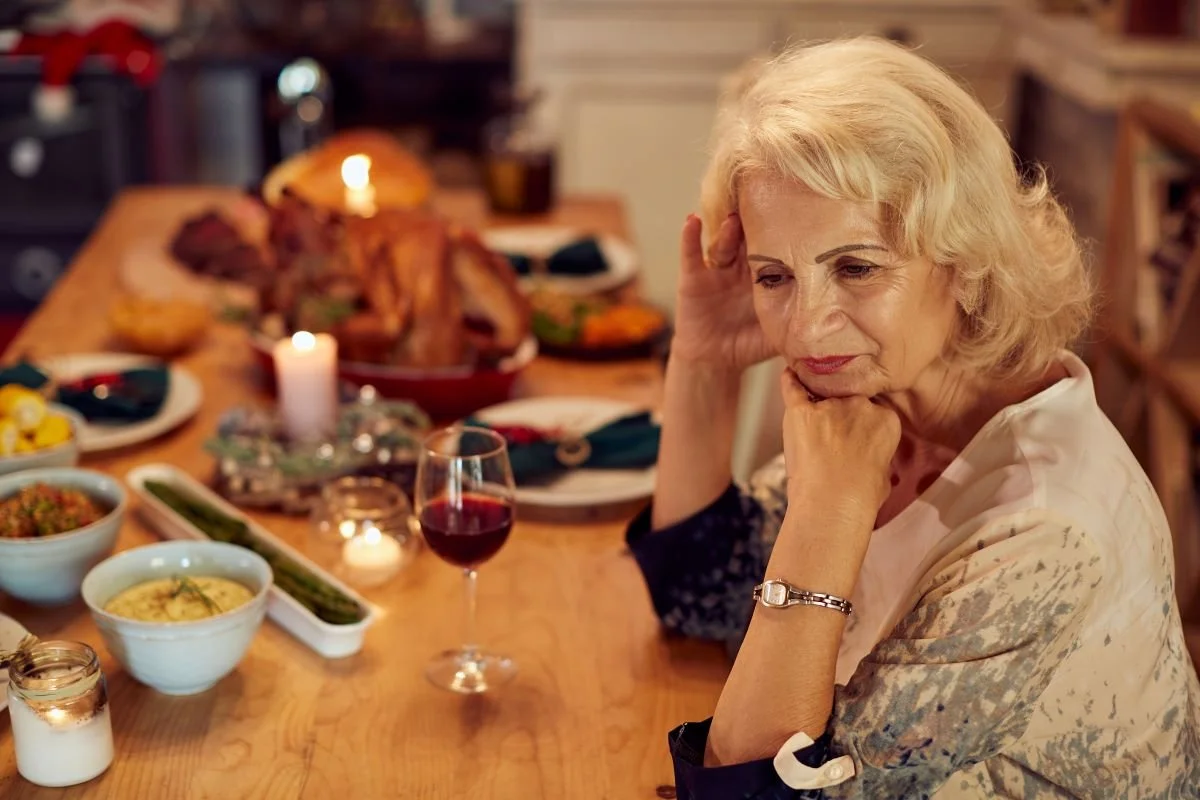
When Thanksgiving Brings Grief Instead of Joy
For someone grieving a loss, Thanksgiving can be especially difficult.
An empty chair at the table. A familiar recipe that someone else always prepared. A tradition that suddenly feels different.
Sometimes grief is connected to the death of a loved one. Other times, it comes from changes that are harder to explain.
A divorce. Estrangement from a family member. A relationship that ended. A move away from home. A health challenge. A family that looks different from the one you imagined.
You may be grieving a person, a relationship, a tradition, or simply the way things used to be.
And even if your loss happened years ago, the holidays can bring those feelings back unexpectedly.
What can help?
Don't pressure yourself to recreate a holiday that no longer feels the same.
You might choose to honor someone through a favorite dish, a story, a photograph, or a small tradition.
Or you might decide that this year, you need something completely different.
Both approaches are valid.
It's also okay to experience moments of happiness while grieving. Enjoying a meal, laughing at a joke, or appreciating time with family doesn't diminish your loss.
Grief and gratitude can exist together.
If the holidays bring up feelings that are difficult to manage, adult therapy can offer a supportive space to process loss, navigate life changes, and develop ways to care for your emotional well-being.
When Your Child or Teenager Doesn't Seem Thankful
Parents often have a particular vision of what Thanksgiving should look like for their children.
They imagine cousins playing together, everyone participating in family traditions, and children expressing appreciation for the effort that went into the celebration.
But children and teenagers experience the holidays differently from adults.
A younger child may become overwhelmed by unfamiliar environments, large gatherings, noise, or changes in routine.
A teenager may feel uncomfortable answering personal questions from relatives or frustrated by expectations to socialize for hours.
And some children may be dealing with anxiety, grief, friendship difficulties, or family changes that make the holiday season especially challenging.
What looks like an ungrateful attitude may actually be stress, discomfort, or difficulty expressing emotions.
Helping Children Navigate Holiday Emotions
Rather than insisting that children be happy or grateful, consider helping them identify what they're feeling.
You might say:
"I know there are a lot of people here today. Do you need a little break?"
Or:
"It seems like you're having a hard time. Do you want to tell me what's going on?"
For younger children, maintaining familiar routines when possible and providing a quiet place to regroup can make gatherings more manageable.
For teenagers, respecting reasonable boundaries around personal conversations and allowing some independence can reduce conflict.
It's also helpful to avoid forcing physical affection. Children can be encouraged to greet relatives respectfully without being required to hug or kiss someone when they feel uncomfortable.
These moments provide opportunities to teach children that they can be kind and respectful while still having personal boundaries.
If your child regularly struggles with emotional regulation, anxiety, behavioral changes, or difficult family transitions, play therapy or teen therapy may provide additional support.
Related reading: Is It Puberty, or Does My Teen Need Therapy? explores how parents can recognize the difference between typical adolescent changes and signs that a teenager may benefit from professional support.
It's Okay If Your Family Doesn't Look Like Everyone Else's
Thanksgiving can also magnify feelings of loneliness or disconnection.
Maybe you're spending the holiday alone. Maybe your family relationships are strained. Maybe you're navigating shared custody arrangements or spending Thanksgiving away from your children.
Perhaps you've chosen not to attend a gathering because being there would be emotionally harmful.
There's often an unspoken expectation that everyone should be surrounded by a large, loving family during the holidays.
But families come in many forms, and not every family relationship is healthy or supportive.
You don't have to force closeness simply because the calendar says it's Thanksgiving.
Instead, consider what connection might look like for you this year.
It could mean sharing a meal with friends, volunteering, calling someone you care about, spending time outdoors, or creating a quiet tradition of your own.
And if you genuinely need a day to rest, that can be meaningful, too.
Five Ways to Protect Your Mental Health This Thanksgiving
You can't control every conversation, travel delay, family disagreement, or unexpected emotion.
But there are ways to approach the holiday with greater intention and self-compassion.
1. Decide What Matters Most
Before the holiday, identify one or two things you'd like to prioritize.
Maybe it's spending quality time with your children, connecting with a particular family member, or simply getting through a difficult day without putting too much pressure on yourself.
Let those priorities guide your decisions.
2. Set Boundaries Before You Need Them
Think about situations that have caused stress in the past.
If certain conversations tend to become uncomfortable, prepare a respectful response. If long gatherings leave you exhausted, consider setting a departure time.
Boundaries are not about controlling other people's behavior. They're about deciding how you will respond and what you are willing to participate in.
3. Make Room for Different Emotions
You can love your family and still feel frustrated by them.
You can be grateful for your life and still feel sad.
You can enjoy parts of Thanksgiving while wishing other parts were different.
Emotions don't have to be consistent to be valid.
4. Give Yourself Permission to Take Breaks
Step outside. Take a short walk. Find a quiet room. Put down your phone.
Even a few minutes away from a stressful environment can give you an opportunity to notice how you're feeling and choose how you want to respond.
If you're attending with children, remember that they may need breaks, too.
5. Let Go of the Idea That One Day Defines Your Family
One difficult gathering doesn't mean your family has failed.
An argument doesn't erase every good relationship.
A holiday that feels different from previous years isn't necessarily a bad holiday.
Thanksgiving is one day. It doesn't have to carry the weight of every family expectation, unresolved disagreement, or personal disappointment.
When Holiday Stress Points to Something Deeper
Some holiday stress is temporary. It comes from busy schedules, travel, financial pressures, and the disruption of everyday routines.
But sometimes, the holidays bring attention to challenges that have been present for much longer.
You may notice that family gatherings consistently trigger intense anxiety. Perhaps you're struggling to communicate with your teenager, feeling overwhelmed by parenting responsibilities, or having difficulty processing grief.
Maybe you recognize a pattern of putting everyone else's needs ahead of your own, even when it affects your emotional well-being.
These experiences don't necessarily mean something is wrong with you or your family.
But they may be worth exploring.
Therapy can provide a space to better understand emotional responses, recognize unhealthy relationship patterns, practice communication skills, and develop strategies for managing stress.
At Davidson Family Therapy, our clinicians support children, teenagers, and adults navigating a wide range of emotional and relational challenges.
Whether you're seeking support for yourself, concerned about your child's emotional well-being, or working through difficult family dynamics, you don't have to wait until things feel unmanageable to reach out.
With offices in Davidson and Cornelius, North Carolina, as well as online therapy options, support can fit into your life beyond the holiday season.
This Year, Just Have a Thanksgiving
Maybe your Thanksgiving will be full of laughter, wonderful food, and meaningful connection.
We hope it is.
But maybe it will be quieter than usual. Maybe you'll miss someone. Maybe you'll need to step away from a difficult conversation. Maybe the kids will argue, dinner will be late, or your plans will change.
Maybe you'll feel thankful and sad at the same time.
That's okay.
You don't have to manufacture happiness to make the day worthwhile.
You don't have to pretend everything is perfect.
And you don't have to measure your holiday against anyone else's.
So from all of us at Davidson Family Therapy, have a Thanksgiving.
Whatever that looks like for you this year.
Support Beyond the Holidays
If holiday stress, grief, anxiety, or family challenges are affecting your emotional well-being, Davidson Family Therapy is here to help.
We offer therapy services for children, teens, and adults in Davidson, Cornelius, and surrounding Lake Norman communities, along with online therapy options.
Davidson Office: 709 Northeast Drive, Suite 22, Davidson, NC 28036
Cornelius Office: 20501 N Main Street, Cornelius, NC 28031
Call 704-912-4095 or visit Davidson Family Therapy to learn more about getting started.
📍 Davidson Location:
709 Northeast Drive, Suite 22
Davidson, NC 28036
📍 Cornelius Location:
20501 N Main Street
Cornelius, NC 28031
📞 Phone: 704-912-4095
👉 Tele-Mental Health / Online Therapy Available Anywhere in North Carolina
