
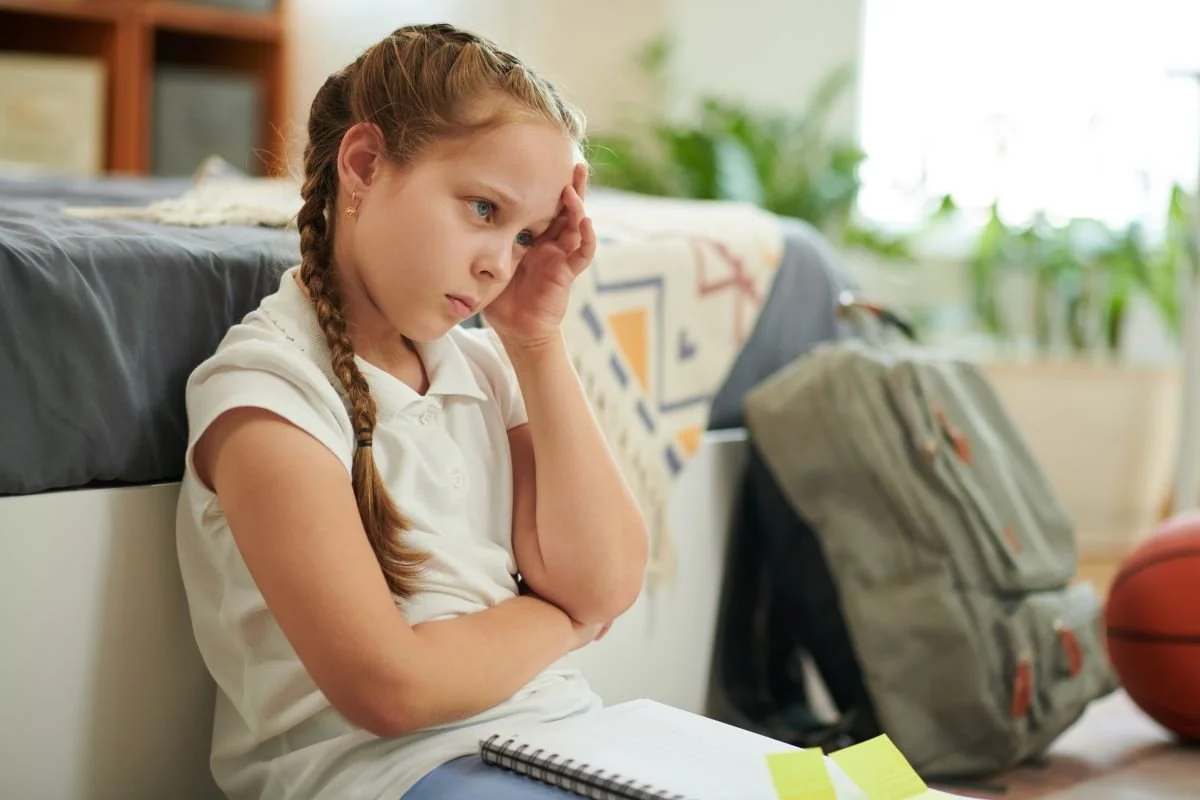
Your child's teacher says they had a great day. They followed directions, participated in class, got along with their classmates, and seemed perfectly happy.
Then they get home.
Suddenly, everything is a problem. Their sibling is too loud. Their snack isn't what they wanted. A simple question about homework leads to tears, yelling, or a complete meltdown.
As a parent, you might wonder, How can my child hold it together for seven hours at school but fall apart the minute they walk through our front door?
This experience is more common than many parents realize. And while it can be exhausting for families, there are often understandable reasons behind these emotional outbursts.
Why Do Kids Have Meltdowns After School?
Throughout the school day, children are constantly managing expectations. They're following rules, navigating friendships, concentrating on assignments, transitioning between activities, and adjusting their behavior to fit different situations.
Even when a child enjoys school, all of that takes energy.
By the time they get home, their emotional resources may be running low. Some children have spent so much effort managing their feelings and behavior throughout the day that they have very little patience left for ordinary frustrations.
You may hear this experience described as after-school restraint collapse. It's an informal term for the emotional release that can happen after children spend hours regulating themselves in a structured environment. It isn't a clinical diagnosis.
Home is often where children feel comfortable expressing emotions they've been holding in.
That doesn't make the behavior easy to manage, but it can help parents understand why it's happening.

What Might Be Contributing to Your Child's After-School Meltdowns?
Not every child experiences the same challenges. Understanding what happens throughout your child's day can help you recognize patterns.
1. Emotional Exhaustion
Think about how you feel after a demanding day at work. You may have spent hours concentrating, interacting with people, solving problems, and managing your reactions.
Children experience their own version of this.
They may have worked hard to stay focused, follow instructions, cope with disappointment, or navigate uncomfortable social situations. When they finally get home, even a small frustration can feel overwhelming.
2. Anxiety That Isn't Obvious at School
Some children experience anxiety without showing noticeable signs in the classroom.
They may worry about making mistakes, disappointing teachers, fitting in with classmates, or keeping up academically.
A child who appears quiet, cooperative, and successful at school may still be experiencing significant internal stress.
Once they're home, that tension may surface through irritability, crying, anger, or emotional withdrawal.
3. ADHD and Emotional Regulation Difficulties
Children with ADHD may find it especially challenging to manage transitions, frustration, impulses, and strong emotions.
They may use considerable mental energy trying to stay organized, remain seated, pay attention, or control their reactions during school.
By the afternoon, they may have less capacity to manage another demand.
Of course, having after-school meltdowns does not automatically mean a child has ADHD. Emotional regulation challenges can occur for many reasons, and understanding the full picture matters.
4. Sensory Overload
Classrooms can be busy environments.
Bright lights, noise, crowded hallways, uncomfortable clothing, and constant activity can become overwhelming for some children.
A child who is sensitive to sensory input may manage these experiences throughout the day but struggle once they're home.
They may need quiet, movement, or time alone before they're ready to interact with the rest of the family.
5. Hunger, Fatigue, and Too Many Demands
Sometimes the explanation is more straightforward.
Your child may be hungry, tired, overstimulated, or simply ready for a break.
If the first thing they hear when they walk through the door is a series of questions or instructions, it can add to an already demanding day.
Homework, chores, extracurricular activities, and family schedules are important, but children may need time to transition before taking on additional responsibilities.
What Can Parents Do to Help?
Understanding the reasons behind after-school meltdowns is helpful, but parents also need practical ways to respond.
Here are several approaches worth trying.
Give Your Child Time to Decompress
Consider creating a predictable transition between school and home.
For some children, that means having a snack and spending 20 minutes reading or playing quietly. Others may need physical activity, outdoor time, or a chance to talk about their day.
There's no single routine that works for every child.
The goal is to recognize that your child may need a little breathing room before moving into homework, chores, or evening activities.
Connect Before Asking Questions
It's natural to want to know how your child's day went.
But questions like "What did you learn today?" or "Do you have homework?" may feel like additional demands when your child is already overwhelmed.
Try greeting them warmly and allowing the conversation to happen naturally.
Sometimes sitting together, offering a snack, or sharing a quiet activity creates a better opportunity for connection than asking several questions right away.
Stay Calm When Emotions Escalate
When your child begins yelling or crying, it's easy for your own frustration to rise.
Try to keep your voice steady and your response simple.
You might say:
"I can see you're having a hard time right now. I'm here when you're ready."
This doesn't mean ignoring inappropriate behavior or eliminating boundaries.
It means recognizing that a child who is emotionally overwhelmed may have difficulty processing explanations, consequences, or problem-solving in that moment.
Once everyone is calmer, you can revisit what happened and discuss better ways to handle frustration.
Help Your Child Recognize Their Feelings
Children don't always have the language to explain what's happening internally.
Instead of assuming they're angry or being difficult, help them explore what they might be feeling.
You could ask:
"Did something happen today that was frustrating?"
"Does your body feel tired or overwhelmed?"
"Would you rather talk about it now or later?"
Over time, these conversations can help children develop emotional awareness and communicate their needs more effectively.
Look for Patterns
Pay attention to when meltdowns happen and what seems to make them worse.
Are Mondays particularly difficult? Do emotional outbursts happen after certain classes or activities? Does your child struggle more when they've had little sleep or skipped an afternoon snack?
Recognizing patterns can help you make practical adjustments.
It can also provide valuable information if you decide to seek additional support.
When Are After-School Meltdowns a Sign That Your Child May Need Therapy?
Occasional emotional outbursts are a normal part of childhood.
Children are still developing the skills needed to manage frustration, communicate feelings, and recover from stressful experiences.
However, frequent or intense meltdowns may indicate that a child needs additional support.
Consider reaching out to a mental health professional if:
Emotional outbursts happen regularly and are becoming more intense.
Your child struggles to recover after becoming upset.
Anxiety, irritability, or sadness is affecting daily activities.
Your child begins avoiding school, friendships, or activities they previously enjoyed.
Emotional difficulties are creating significant stress within the family.
Your child seems overwhelmed but cannot explain what they're experiencing.
Your usual parenting strategies are no longer helping.
You don't have to wait until your child is struggling at school or experiencing a major crisis to ask for guidance.
Sometimes children who appear to be doing well academically are still working very hard to manage emotions that others don't see.
How Play Therapy Can Help Children With Emotional Regulation
Children don't always communicate their feelings the same way adults do.
Younger children, in particular, may have difficulty explaining anxiety, frustration, sadness, or overwhelming experiences through conversation alone.
Play therapy provides a developmentally appropriate way for children to explore emotions, express experiences, and develop coping skills with the guidance of a trained therapist.
Depending on the child's needs and the therapeutic approach, play therapy may help children work on recognizing emotions, building confidence, managing frustration, and navigating challenging situations.
It can also help parents better understand their child's emotional needs and learn ways to support them at home.
At Davidson Family Therapy, we recognize that every child is different. Therapy should reflect each child's developmental stage, personality, experiences, and individual needs.
Learn more about our Play Therapy services and how this approach may support your child.
Your Child Can Be Doing Well at School and Still Need Support
One of the most confusing parts of after-school meltdowns is hearing that your child is doing beautifully in the classroom.
It can leave parents questioning whether they're doing something wrong at home.
But children's emotional experiences aren't always visible to teachers, friends, or even their parents.
A child can earn good grades, follow classroom rules, maintain friendships, and still struggle with anxiety, emotional regulation, or overwhelming feelings.
Rather than focusing only on how your child behaves, consider what their behavior may be communicating.
Are they exhausted? Anxious? Frustrated? Having difficulty with transitions? Struggling to express something they don't fully understand themselves?
These questions can help shift the focus from simply stopping the meltdown to understanding what your child needs.
Child Therapy in Davidson and Cornelius, NC
If your child frequently falls apart after school, you don't have to figure everything out on your own.
Davidson Family Therapy supports children and families navigating anxiety, emotional regulation difficulties, school-related stress, and other mental health concerns.
With locations in Davidson and Cornelius, North Carolina, our practice helps families find support that fits their child's individual needs.
Whether your child would benefit from play therapy or another form of counseling, seeking guidance can be a positive step toward helping them better understand and manage their emotions.
If after-school meltdowns have become a regular struggle in your household, we invite you to explore our services and schedule an appointment with Davidson Family Therapy.
Schedule with Davidson Family Therapy to learn more about current therapist availability and find an option that works for your family.
This article was written by the Davidson Family Therapy team, based in Cornelius and Davidson, NC, with professional experience providing therapy to children and teens in the Davidson, Cornelius, Charlotte, and greater Lake Norman community.
📍 Davidson Location:
709 Northeast Drive, Suite 22
Davidson, NC 28036
📍 Cornelius Location:
20501 N Main Street
Cornelius, NC 28031
📞 Phone: 704-912-4095
👉 Tele-Mental Health / Online Therapy Available Anywhere in North Carolina
